
Description
When a commercial walk-in goes offline for renovation or equipment replacement, inventory risk starts the same day. This guide covers capacity planning, food-safety temperatures, power and placement, and how electric cooler and freezer trailer rentals keep kitchens and institutions running.
Temporary Cold Storage During Facility Upgrades: A Practical Guide for Commercial Kitchens and Institutions
Facility upgrades do not pause food service, campus cafeterias, hospital dietary programs, or regulated cold inventory. When a primary walk-in cooler or freezer is offline for renovation, inspection, or equipment replacement, the cold path has to move with the project, not wait for the ribbon cutting.
Temporary cold storage is mission-critical infrastructure for the construction window. The right plan protects inventory, keeps inspectors satisfied, and lets kitchens and institutions stay open while the permanent room is rebuilt.
Table of Contents
- #TLDR
- Why Facility Upgrades Create Cold Storage Gaps
- Food Safety Temperatures You Must Hold
- When Teams Need Temporary Refrigeration
- How to Size Capacity for a Renovation Window
- Trailer vs Ground-Level Container
- Power, Placement, and Site Access Checklist
- Electric Units for Occupied Facilities
- A Simple Timeline: Book Before Demo Day
- Why Chill Out Rentals Fits Upgrade Projects
- Conclusion
#TLDR
- Cold holding standard: Time/temperature control for safety (TCS) foods generally require cold holding at 41°F (5°C) or below, consistent with state food safety guidance such as the Nebraska Department of Agriculture Focus on Food Safety and mobile facility packets based on the FDA Food Code (for example Pennsylvania Department of Agriculture mobile food facility guidance). Confirm local health authority rules for your site.
- Plan early: Book temporary capacity before demo day so transfer, power, and placement are locked before the walk-in goes dark.
- Match the use case: Kitchen cutovers, hospital and lab windows, campus food-service renovations, and seasonal surge without a capital purchase all need certified commercial units, not improvised domestic coolers.
- Electric advantage: Quiet, fume-free electric trailers suit occupied docks, patient-adjacent zones, and corporate campuses where diesel noise and exhaust create operational friction.
- Partner: Chill Out Rentals deploys electric cooler and freezer trailers with setpoints from −10°F to 50°F (−23°C to 10°C), compliance-minded design (CSA, UL, NSF, ESA), and flexible short-term through seasonal terms across the USA and Canada.
Why Facility Upgrades Create Cold Storage Gaps
A permanent walk-in is part of the building envelope: power, drains, floors, and fire separations. Renovation work often takes that room offline for days or months. Foodservice, pharma staging, and campus operations still receive deliveries on the same cadence.
Common failure modes during upgrades:
- Inventory transfer under time pressure once demo starts
- Split cooler and freezer needs with only one temporary unit on site
- Power not ready when the trailer arrives
- Poor placement that blocks egress, dock traffic, or compressor airflow
- Non-commercial gear that fails inspection or cannot hold setpoint under door traffic
Treat temporary refrigeration as a line item in the construction schedule, same as temporary power, life safety, and waste.
Food Safety Temperatures You Must Hold
Improper holding temperatures remain a core foodborne illness risk factor called out in the FDA Food Code 2022. For day-to-day operations, cold holding for TCS foods is widely implemented at 41°F (5°C) maximum, as summarized in state materials such as Nebraska’s Focus on Food Safety. Mobile and temporary equipment guidance likewise expects cold-holding equipment capable of 41°F or below (PA mobile food facility packet).
Practical implications for a renovation trailer:
- Hold cooler setpoints that keep product at or below 41°F under real door openings
- Hold freezer setpoints for frozen inventory (many commercial programs target well below freezing; size and setpoint with your food safety plan)
- Use commercial interiors and food-safe surfaces inspectors expect
- Log temperatures during the outage window the same way you would for a permanent walk-in
Always verify requirements with your local health authority and internal HACCP or food safety plan. Rules can vary by jurisdiction and by product type (for example vaccines and biologics follow separate pharmaceutical cold-chain standards).
When Teams Need Temporary Refrigeration
Kitchen and commissary renovations
Restaurants, caterers, and central kitchens take walk-ins offline for floors, panels, compressors, or full gut renovations. Temporary trailers keep prep and receiving continuous so menus and contracts stay intact.
Hospital, lab, and regulated environments
Dietary kitchens, research staging, and some medical support inventories need certified capacity during HVAC or cold-room work. Quiet electric operation reduces disruption near patient and staff areas. (For pharmaceutical-grade programs, pair this operational guide with your quality unit’s SOPs; see also Chill Out Rentals’ pharmaceutical cold storage coverage on the site blog.)
Campus and corporate food-service cutovers
Universities and corporate campuses often phase cafeteria renovations while buildings stay occupied. Temporary cold storage at the dock or service yard bridges each phase without multi-week menu shutdowns.
Seasonal capacity without capital purchase
Peak seasons and temporary programs need cubic feet without a permanent build. A rental unit ends when the demand ends.
Emergency overlap during planned work
Even “planned” upgrades collide with unexpected delays. Having a trailer already on the calendar gives a buffer if the permanent room slips.
Industry providers consistently list kitchen remodels, walk-in failures, and institutional renovations among primary rental use cases (for example B&S restaurant cold storage and construction/remodel applications such as Polar Leasing construction and remodeling). The pattern is the same: continuous cold path while the building changes.
How to Size Capacity for a Renovation Window
Estimate from operations, not from “what fits in the alley.”
- Peak inventory volume during the outage (not average week). Include frozen and refrigerated separately.
- Delivery cadence. Fewer deliveries mean more on-hand stock and more cubic feet.
- Door traffic. High open rates need headroom on compressor capacity and airflow, not a unit packed wall to wall.
- Segregation. Raw proteins, ready-to-eat, dairy, and beverages often need separation inside the temporary unit or a second unit.
- Growth buffer. Add 15-25% for slip in the construction schedule and unexpected deliveries.
Map SKUs to cooler vs freezer early. One dual-need facility often requires two setpoints or two units rather than a single compromise temperature.
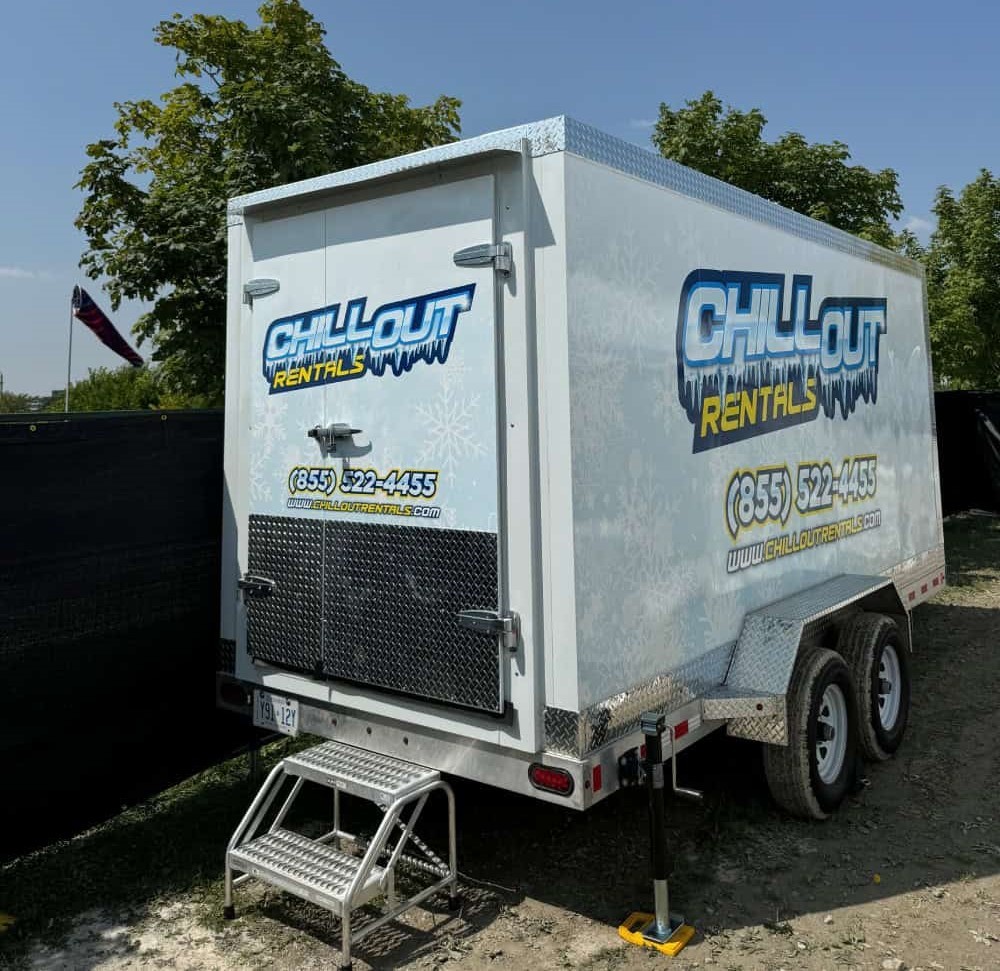
Chill Out Rentals sizes the fleet for commercial work, including mobile walk-in cooler and freezer trailers and higher-capacity ground-level containers. Browse local availability via cooler and freezer rentals near you or request a quote for your market at chilloutrentals.com.
Trailer vs Ground-Level Container
| Factor | Mobile cooler / freezer trailer | Ground-level container |
|---|---|---|
| Mobility | High; reposition as phases change | Stationary once set |
| Access | Step or ramp | Flush walk-in feel |
| Footprint | Compact for tight docks | Larger bulk storage |
| Best fit | Phased cutovers, multi-week kitchen jobs | Longer outages, high cube needs |
Choose based on dock geometry, forklift vs hand truck flow, and how long the permanent room stays offline.
Power, Placement, and Site Access Checklist
Complete this list before the truck leaves the yard:
- Power: Confirm voltage, amperage, and a dedicated circuit matching the unit (commonly single-phase options; larger units may need higher service). Avoid shared circuits with construction tools that trip breakers.
- Path of travel: Height, width, turning radius, and surface load for delivery day.
- Level pad: Flat, firm asphalt, concrete, or compacted ground so doors seal and drains behave.
- Clearance: Leave space around condensing equipment for heat rejection (often several feet; follow the unit’s placement guidance).
- Security: Lockable doors, camera coverage if available, and key control during multi-contractor access.
- Egress and fire lanes: Do not block exits, hydrants, or emergency vehicle paths.
- Transfer plan: Pallets, carts, labeling, and staff scheduled for the move-out of the old walk-in and move-in of the temporary unit.
Electric plug-and-play units reduce the need for on-site diesel fueling and lower fume risk at the loading dock.
Electric Units for Occupied Facilities
Diesel-driven temporary refrigeration can introduce noise, exhaust, and fuel logistics next to occupied buildings. Electric-powered cooler and freezer trailers address those constraints:
- Quiet operation near offices, patient zones, and guest-facing areas
- No on-site diesel burn or fumes at the dock
- Standard electrical inputs for true plug-and-play deployment where service is available
- Precise setpoint control across cooler and freezer ranges
Chill Out Rentals focuses on electric commercial units with temperature control from −10°F to 50°F (−23°C to 10°C) and equipment aligned with CSA, UL, NSF, and ESA expectations your compliance teams recognize.
A Simple Timeline: Book Before Demo Day
| When | Action |
|---|---|
| 4-6+ weeks out | Confirm renovation dates, cooler vs freezer mix, and rough cube |
| 3-4 weeks out | Lock unit size, power plan, and delivery address |
| 1-2 weeks out | Finalize pad, access route, and inventory transfer crews |
| Delivery day | Set, power, verify setpoint, then transfer inventory |
| During outage | Daily temperature checks and access control |
| Project complete | Transfer back, schedule pickup, document closeout |
Rapid deployment remains available for emergency failures, but planned upgrades run smoother when the cold path is on the same Gantt chart as demolition.
Why Chill Out Rentals Fits Upgrade Projects
Chill Out Rentals supplies temporary mobile refrigeration across the United States and Canada for commercial and institutional operators who cannot pause the cold chain.
What facilities get:
- Electric cooler and freezer trailers and cold storage options built for commercial duty
- Precise control from −10°F to 50°F (−23°C to 10°C)
- Compliance-minded design for food and regulated environments (CSA, UL, NSF, ESA)
- Flexible terms: short-term, multi-week, or seasonal placement matched to the outage window
- Logistics: delivery, setup coordination, and pickup so your team focuses on the renovation, not equipment hunting
Typical upgrade use cases we support:
- Kitchen and commissary renovations
- Hospital and lab backup during maintenance windows
- Campus and corporate food-service cutovers
- Seasonal capacity without a capital purchase
Request availability and a free quote at chilloutrentals.com.
Conclusion
A facility upgrade without a temporary cold plan puts inventory, compliance, and service continuity at risk on day one of demo. Size for peak volume, hold food-safe temperatures, stage power and placement early, and choose commercial electric capacity that matches occupied sites.
Plan the cold path before demo day. When your walk-in schedule is fixed and the room is not, Chill Out Rentals is ready to deploy.
Next step: Visit chilloutrentals.com or contact the team for a quote on cooler trailer, freezer trailer, or container capacity for your renovation window.

 Cage Code: 17P02





Post a Comment